Friday, May 19, 2006

You can make brick from the ashes

1 comments Posted by Hannah at 9:08 PM


I found this song the other day, and felt it was very pretty. The person who wrote it never expereinced any type of abuse. If you click the link he will speak to WHY he wrote the song! Also at the end there is a link you can click to hear it on a website....and if you life purchase it.


His heated words
They boil over
But they don't even melt into your mind
'Cause his cold heart, has frozen over
Every loving feeling that you had inside
You've been blinded by fear, guilt, and blame
Holding in the anger and the pain but

You can make
BRICKS FROM THE ASHES
Of his raging fires
And build a highway to the dreams you so desire
You can make
BRICKS FROM THE ASHES
Of the love he burned and build a new life
From the lessons you've learned

Sometimes love leaves but desperation
Holds on yesterday
And your heart grieves in isolation
You've run out of reasons to stay
It's time to take your tears and walk away
But you'll survive, you'll be O.K.

You can make
BRICKS FROM THE ASHES
Of his raging fires
And build a highway to the dreams you so desire
You can make
BRICKS FROM THE ASHES
Of the love he burned and build a new life
From the lessons you've learned

Breaking free is so hard to do
But the time has come to believe in you

You can make
BRICKS FROM THE ASHES
Of his raging fires
And build a highway to the dreams you so desire
You can make
BRICKS FROM THE ASHES
Of the love he burned and build a new life
From the lessons you've learned


You Can Make Brick from the Ashes.........

Thursday, May 18, 2006

My Journey from Marital Abuse

17 comments Posted by Hannah at 3:24 PM


My Journey From Marital Abuse
To the outside world, we were the ideal American family … but within the walls of our beautiful home, something was terribly wrong.

by Trudy M. Johnson


Have you ever found yourself in circumstances so difficult you literally wanted to run away? I was once in such a place. Like the psalmist, I wanted to cry out, "Oh, that I had wings like a dove! I would fly away and be at rest" (Psalm 55:6, NIV).

As an adult, I literally ran away from home. I ran away from a 3,000 square-foot, custom-built cedar home with a pool. I ran away from a successful business. I ran away from a country club membership. In the world's eyes, I had it all. Yet I ran away.
--------------------------------------------------------------------------------

When bruises would show up on my shins, I wore long dresses or pants. Makeup covered the broken capillaries on my right cheek or sometimes my chin.

--------------------------------------------------------------------------------


Rocky Beginnings

Six months into my marriage, I knew I was in trouble. My husband brought a huge amount of unresolved anger into our marriage. His bad childhood became my bad marriage. When I married him, I was somewhat aware of his past, but realistically, I was still very naive about how deep his wounds were — and how his experience as a victim of childhood abuse would impact me and our two sons.

At different times, his brand of physical and mental cruelty included kicking me with steel-toed boots, trying to force my hands into the flames of the fireplace — even aiming a gun at me. For 23 years, he held me hostage with the threat that if I left, I’d never see my sons again.

At first, my optimistic outlook on life kept me believing that if I would just love him enough, he would change. I loved him, I prayed for him, I tolerated the pain he caused me, and year after year I ignored the lack of normalcy in my life.

In my denial, I never gave up hope that he would change. I made excuses for his behavior and hoped and prayed, never seeing any evidences of change. Perhaps it was my fault, I thought … if I were to just love him more.

Survivors

Within the setting of our beautiful home, my two boys and I learned to live in survival mode. Like three little mice, never knowing when the trap would spring shut, our tolerance for name calling, intimidation, shaking, yelling, pushing and hitting was forced to grow.

The three of us kept our family secret very well. When bruises would show up on my shins, I wore long dresses or pants. Makeup covered the broken capillaries on my right cheek or sometimes my chin.

But worse by far than the physical abuse was the verbal abuse. I hardly remember a day when I wasn't insulted, put down or verbally assaulted. The words sunk deep into my soul and did almost irreparable damage. Truly, words have the power of life or death.

To the outside world, we were the ideal American family. We were country club members and successful business owners. My boys excelled in school and in sports. My children and I learned to cope, and our hearts shared our common secrets.

Too Much to Bear

By 1989, 19 years of this destructive lifestyle had taken its toll on my emotional health. People can be grumpy or negative and it will not hurt you deeply. But in a destructive relationship like my marriage, the abuser destroys the very core of your being.

They gradually wear away the very person you are until you no longer have a healthy image of who God made you to be. In the abuser’s presence you become so beaten down that you begin to expect bad treatment. What's worse, you actually "feed" on that bad treatment. It was in the depths of the resulting depression that I began to plan my own suicide.

By this time, my sons had finally left home and both were attending the United States Air Force Academy — well out of my husband’s reach. I began writing letters to my boys in case I ever truly got the courage to end my life. As I journaled, I began copying verses from the Psalms into small notebooks.

I had a tiny little Bible, the kind they give soldiers in the field. I would hide in the bathroom to read it. As I copied verses — Oh, how they penetrated my soul! It was the balm of those words that began my emotional healing.

'The Balm of Giliad'

Journeying through the Psalms and journaling were the tools that helped me survive three more tough years. I developed an intense appetite for God's Word and I read my Bible whenever possible. The Holy Spirit began to heal me from the inside out.

Eventually, I was able to become strong enough spiritually to have a God other than my abusive husband. This inner strength helped me break free of my domestic bondage. Once I "let go" of everything in my life, the Lord began to work.

At last, my relationship with God was more important than anything else. I let go of the house. I let go of the pool. I let go of the business. I let go of the country club membership. Hardest of all, I let go of my marriage.

Letting go of my marriage was the hardest thing I've ever had to do. I'd hoped so long for change, but I finally had to admit to myself that I could not "fix” him, nor could I fix my marriage.

Your Maker Is Your Husband

I began to trust God for whatever the future might hold. Once I let go of what the world had to offer, the Lord miraculously began to orchestrate events whereby I was able to leave my emotionally and physically unsafe home.
--------------------------------------------------------------------------------

The truth is, God doesn't ever call us to be destroyed trying to save someone else. He doesn't ask us to be destroyed saving a relationship. He only asks us to let Him be Lord of our life.

--------------------------------------------------------------------------------


In order to make my escape, it was necessary for me to choose only my most precious possessions. After nine months of preparation and planning — and with the help of my sister who did all the behind-the-scenes legwork — on July 8, 1994, I became a "missing person."

I left behind almost every material thing I owned. With just my clothes and a few personal items, I ran away from home. My face could have been on a milk carton. I was an adult runaway.

The Truth Will Make You Free

Through my journey, I learned that Jesus Christ came to "bind up the brokenhearted [and] proclaim freedom for the captives" (Isaiah 61:1). The truth is, God doesn't ever call us to be destroyed trying to save someone else. He doesn't ask us to be destroyed saving a relationship. He only asks us to let Him be Lord of our life.

He calls us to let go of the things that hold us in bondage. He especially wants no other Gods before Him — including abusive husbands.

Ultimately, there are some situations and some people that only the Lord can change. I know my own spiritual compass had to be fixed before God would heal my soul from the damage done by the abuse in my life.

For me, God is restoring "the years the locusts have eaten" (Joel 2:25). I have no regrets about running away. As a matter of fact, I run on a daily basis. The difference is that I now run to the one who brought order and healing into my life, my Lord and my Savior, Jesus Christ.


Trudy Johnson has been an employee of Focus on the Family since August of 1994, working in the Pregnancy Resource Ministry. She has been happily and peacefully remarried for seven years to her husband Lonney, who also works at Focus.


--------------------------------------------------------------------------------

Copyright © 2004 Focus on the Family
All rights reserved. International copyright secured.

Sunday, May 07, 2006

Interview with Paul Hegstrom

3 comments Posted by Hannah at 11:29 AM


Link to website to purchase book!


HOPE FOR PASTORS WHO BATTER

The following is an interview with Paul Hegstrom, posted on the web site: www.clergyrecovery.com. It first appeared in STEPS, a publication of the National Association for Christian Recovery.

STEPS: Your work with men who batter did not begin as the result of some kind of academic interest.

PAUL: Definitely not. Let me give you a brief history. My father was a Nazarene pastor. So, I was raised in a Christian family. To most people I looked like a fine Christian. But I battered my wife for years starting from before we were married. I was physically abusive and very emotionally abusive. I hated being like that. But I could not stop. I even became a pastor in the hopes that it would help me stop the abusive behavior.

STEPS: It must have been really difficult to face the fact that becoming more religious wasn't going to fix what needed to be fixed.

PAUL: It was. I honestly felt that I would be unable to abuse my wife if I were a pastor. I thought there would be accountability to the church leadership and so on. But there were many Sundays when I would scream and yell and slap the kids around and push, shove or hit Judy and maybe an hour later I would be in the pulpit.

I can remember preaching many a Sunday morning when I'd have flash-backs and my message would not flow and I'd wonder "what am I doing in front of this congregation when less than an hour ago I was abusing my family in the parsonage?" I was knocking holes in the walls of the parsonage. Judy would lock herself in the bathroom and I'd put my shoulder to the door and break it down.

When I left the ministry after three and a half years the parsonage was in shambles. About this time I left my wife and family. I moved away from everything I knew. We divorced. I really thought that I was lost. And since I was already lost for eternity I might as well “party hearty” while I had time.

So, I got into drugs and alcohol, sexual addiction, and live-in relationships. But the battering continued. I almost killed the woman I was living with. That is actually what forced me to finally get help. To avoid being prosecuted for attempted murder I agreed to enter a program for men who batter.

STEPS: I know there are many more resources available today for batterers than were available when you first got help. What was most helpful to you back then?

PAUL: The main benefit of the program for me was that I was forced to recognize that the problem was about me. I had a problem. It wasn't about my wife, my girlfriend, my parents, the kids, the dog, whatever. It was my problem. So, I started to learn something about me. That was helpful. But it wasn't really getting to the depths I needed and I became extremely frustrated. I also became extremely angry with God during this time. A key turning point for me was one night when I was wrestling with God in prayer. I remember screaming at God in the middle of the night until I had no more tears and no more voice. It was then that I heard God say "Paul, you don't have a teachable spirit." I knew immediately that we had hit pay-dirt! I knew that I did not have a teachable spirit. All of my life I had been an authority to myself. No one could give me any kind of input. So, I started to pray "God teach me to be teachable." That was the beginning of the change for me.

STEPS: What do you see as the roots of family violence?

PAUL: Put simply, violence is about arrested emotional development. If the wounds you experienced in childhood have stopped your emotional development, you have never developed your core or real personality and character. What happens is that you develop a pseudo personality that is not a true identity. This personality consists of the expectations of important people in your life of whom you fear rejection. The pseudo personality becomes very changeable, depending on who you are with and where you are. This is the "double minded man" referred to in the book of James.

The primary symptom of arrested emotional development because of a wounded childhood is the insistence that I am my own authority. There is an intense distaste for any kind of authority. If your wife says “How much money is in the checking account? I need to buy groceries.” this is immediately an authority issue. We fight the authority of the boss, the foreman, the authority of the pastor, of God. One of the difficulties with traditional therapeutic approaches to helping batterers is that the therapist can be an authority figure. Batterers will play the game of therapy to get through but the real hidden agenda may remain 'no one is going to tell me what to do.'

If you have been wounded early in life and your development process has been frozen, you are locked into what I call the ‘age of directives.' This leaves you very dependent and makes it very difficult for you to make decisions. You can make decisions for other people and control their lives, but decisions for your life are made by indecision, circumstances, situations and other people. You have no control of your life so you try to manipulate and control circumstances, situations and other people. This results in a life of chaos.

If you are stuck in the age of directives, the stage where parent's fix everything, then you are always looking for a Mommy to make it right for you because you cannot resolve your own conflicts. You grow chronologically, marry and many times you make a Mommy out of your spouse. When you're in crisis you try to get her to fix it or, in essence, if she'll get help then everything will be okay. This becomes your way of escaping your own responsibilities and blame-shifting the responsibility to her. This never resolves the core problem because this is an individual issue, not a marriage issue.

The key to recovery is to restart the emotional development process that was damaged in childhood. I call that process 'developmental reconstruction.' We don't need to be driven by childhood wounds for a lifetime. We can develop a real personality to replace the pseudo personality that has led to such chaos.

STEPS: You mentioned earlier that you hated being abusive. Why do you think you did things you hated?

PAUL: When you are wounded in early childhood you never reach the age of decision emotionally. Many times you know what you should do, but you are driven by your irrational belief systems and survival methods to maintain control. You end up doing what you hate because you are driven by your wounds and unresolved conflicts.

STEPS: Many people are skeptical about the possibility of recovery for abusive men.

PAUL: If I can do it, anyone can. I was deeply lost in the abusive process and deeply wounded by childhood trauma. It's not an easy thing to recover from. It's hard work. But it is possible. Even though I abused her for many years, after several years of hard work in recovery Judy and I remarried. We have had to work hard on our relationship but we have broken the cycle of abuse in our generation. I still have to work on my recovery, we still work hard in our relationship. And our kids have had a lot of issues to work on because of all the abusiveness in our family. But my grandchildren now live in homes that have been freed from the dynamics of abuse. That to me is exciting! Recovery is possible because God is a magnificent God. God has made a way of escape!


--------------------------------------------------------------------------------


Paul Hegstom is the founder of Life Skills International (PO Box 31227, Aurora, CO 80041-1227, 303-340-0598) a network of over 90 programs offering support groups and intensive workshops for men who batter. His latest book, Angry Men and the Women Who Love Them will be released in the near future by Beacon Hill Press.

This interview first appeared in STEPS, a publication of the National Association for Christian Recovery.


--------------------------------------------------------------------------------

This article is posted on the website for The Clergy Recovery Network www.clergyrecovery.com which exists to support, encourage and provide resources to religious professionals through personal crisis and early recovery. If you are a pastor, missionary, religious professional or a spouse of one and you need help, this site will be helpful to you. The purpose of the web site is to guide clergy and their families towards a saner and more grace-full style of life.

This particular article is one of many which could help clergy and religious professionals and their families. At the end of the article they have a section where you can post a "comment, question, story, or suggestion" about this article or respond to someone else who has done so. To do so, scroll down after you CLICK HERE.

Thursday, April 27, 2006

Defining abuse opens eyes of Religious Leaders

0 comments Posted by Hannah at 8:20 AM


Click here for link to book purchase!

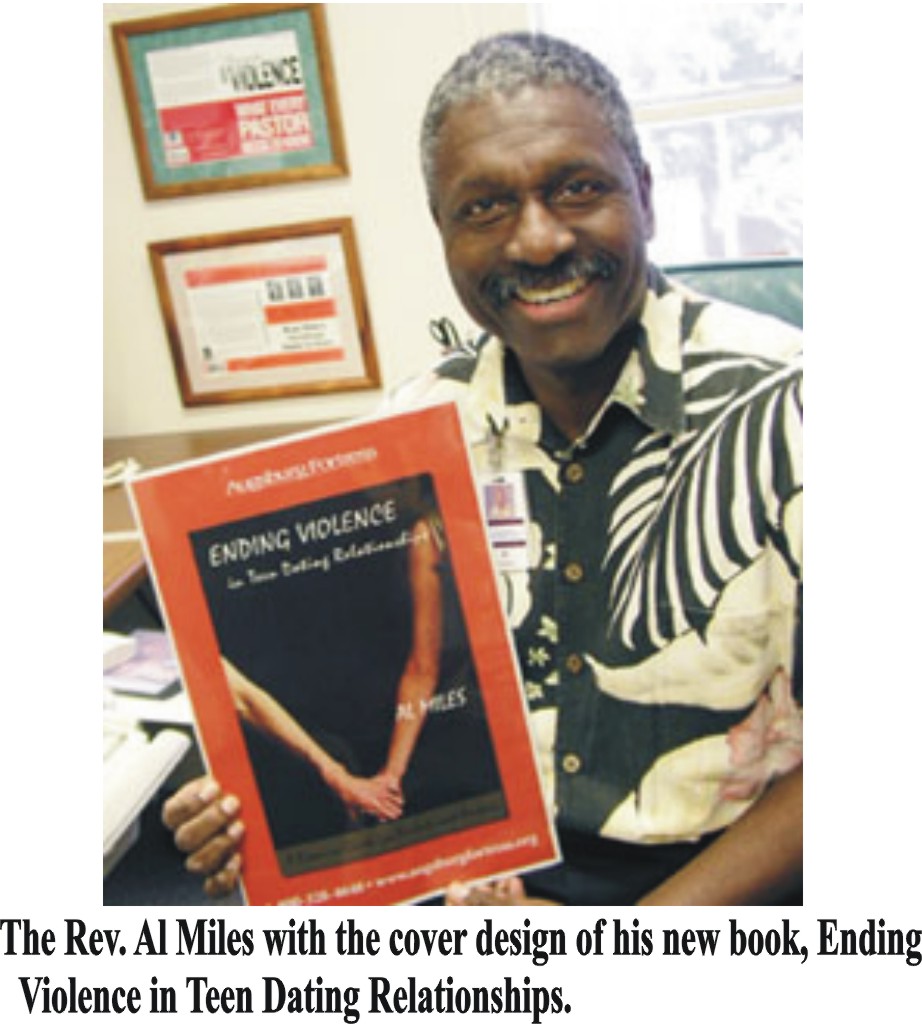
His other book, Domestic Violence: What Every Pastor Needs to Know

To end domestic violence, hospital chaplain the Rev. Al Miles of Hawaii believes more men and women of God must learn and then speak, preach and teach the truth about what it is, how widespread it is and how some Christian teachings can be twisted to condone, deny and exacerbate it.

Speaking recently at several gatherings in Spokane, he said domestic violence happens in the religious community as much as in the secular community.

One day he had a call from Carol, who was in the emergency room. Her loving, Christian boyfriend had broken her jaw.

“She did not grow up in a violent home, but a loving one,” he said. “I came and offered care, love and prayer. She is my youngest sister.

“We need to treat every victim of domestic violence or sexual assault as our sister, mother, daughter, granddaughter or friend,” Al said, “because those are the victims.”

He travels and speaks 20 times a year to awaken people to the hidden realities of the violence.

“There are survivors here. There are perpetrators here, too,” he said after prayers, songs and a biblical mini-drama at the Berachah Church. “There are survivors and perpetrators in pews and pulpits.”

After defining the range of emotional, mental, spiritual, sexual and physical violence at one clergy retreat, half of the male clergy realized they had said and done such things, but didn’t consider it abuse. They said his descriptions would “include everyone.”

“Name-calling is not illegal, as emotional abuse, but is immoral and inappropriate,” Al said.

“When women hear about tactics abusers use, many finally put their finger on what made them feel uncomfortable, afraid and ashamed,” he continued.

“Society and the church minimize abuse, encouraging denial and entitlement,” Al said. “We must speak the truth and work together to end domestic violence and sexual assault.”

While Scripture is a tool for healing, perpetrators often misuse it to justify their abuse.

“In John 13:34-35, Jesus gave a new commandment: ‘Love one another as I have loved you,’” Al said. “In love, there is no cursing, raping, strangling, threatening or violence.

“Across the country, I hear of male clergy and laity praising God and then raping, cursing, strangling, threatening and beating. It’s a crime and a sin. God did not ordain the horrors survivors experience nor empower perpetrators to abuse because of being male.”

“Mary’s husband beat, threatened and raped her many Sunday afternoons after preaching spirit-filled sermons. Their son hid his face in a pillow to muffle his mother’s pleas to stop,” Al said.

“Domestic violence is a pattern of behavior in which a person uses coercion, harassment, deception, humiliation, threat and force to establish and maintain power and control. It’s not about someone snapping, losing it, being pushed or being nagged until he can’t take it. It’s about power and control. The person does not ‘lose it’ in front of his commanding officer, in the pastor’s office or a business office. He ‘loses it’ with his wife and children.

“It’s not about being sick, but about being slick,” Al said.

Who are men who abuse? Athletes, construction workers, physicians, attorneys, pastors, fathers, uncles, brothers, anyone, he said, noting that he focuses on male abusers, because they are 95 percent of the perpetrators.
Who are the women violated? They work in all jobs and in homes. They are mothers, sisters, friends, daughters and granddaughters, he said.

Beyond physical abuse or sexual assault, he said domestic violence includes emotional, psychological and spiritual abuse.

First, a husband establishes control by cutting his wife off from contact with friends and family, dictating who she sees, what she wears, how she styles her hair, when she uses the car, how much money she has, what she does and where she goes.

From social isolation and control, the behavior escalates into psychological battering with name-calling from sexual slanders to putdowns, such as “stupid.”

Then come threats or destruction of property or pets, showing what the man can do to the woman, Al said.

“When Sarah declined sex one night, Ted beat a brick wall until the wall and his hands were covered with blood. She never turned him down again. She knew the wall was her body,” Al said.

Some pastors think it’s impossible for a married man to abuse, because a wife is a man’s property, he noted, but “no means no, and sexual assault is a crime even in marriage.”

Abuse may escalate to beatings, stabbing, shooting, strangulation or just blocking her from leaving a room.

Often people do not believe a woman who says she has been abused if they see no bruises.

“Emotional and psychological abuse leave no visible bruises, and perpetrators who claim to be out of control somehow hit so no bruises are visible,” said Al.

“Spiritual abuse misuses God, Jesus, sacred texts, doctrines and teachings to support male dominance,” Al said.

The oft-quoted justification from Ephesians 5:22 that wives are to be subject to their husbands leaves out verse 21 and following verses that say a man and a woman are to be subject to and responsible to each other.

“Using Christianity to justify abuse is blasphemy,” Al said. “What is it like for a pastor’s wife when the congregation believes him—the preacher who says wonderful things, kisses babies and visits them—then blames her for being abused or his having a mistress, and expects her to leave?

“What can we do? We need to keep as a top priority the safety of the victims—women and children—over keeping a marriage together,” he said.

Once clergy preach and teach about domestic violence, they discover how many women suffer, he said, advising clergy to know qualified domestic violence counselors and refer victims to them, rather than trying to do the counseling themselves.

Al knows his limits and does not counsel victims. He refers them to trained domestic violence counselors even if they are not Christian.

“We need to hold men accountable, not look the other way or blame the woman. We need to direct men into batterer-specific treatment, not anger management, where many learn new tactics.

“Once people thought abusers were angry and out of control,” he said, “but we realize they are in control. Anger is a feeling. Violence is a behavior.”

In a Wednesday workshop, he asserted: “Domestic violence is everyone’s business. We need to join together as people of different races, cultures and religions to fight domestic violence and sexual assault.”

He described an appropriate response by a church: A deacon admitted abusing his wife. The board removed him from office and encouraged him to enter offender-specific help. His wife sought safety and care through service providers. Although the church board continued to relate with the man, they knew how to do it without colluding.

In a contrasting example, after a pastor’s wife accused him of marital rape, beating, strangling and cursing her, he admitted it to the council, confessed, cried and said it would not happen again. The church asked him to confess publicly. They asked his wife to forgive him.

“It’s easy to cry contrived tears one Sunday and be in the pulpit the next as if nothing happened,” Al said.

Participants listed reasons women stay: fear, economics, dependency, low self-esteem, religious reasons, social norms, families, no support system, no resources, children, pride, shame and submission.

He added other reasons:

• An attractive man often charms his way into a woman’s life and preys on her vulnerability.

• Churches advise wives to stay with, pray for and obey their husbands.
• Many wives love their husbands and want the abuse to end, not the relationship.

Al then discussed some myths and realities about abuse:

• Fewer than 20 percent of abusers have a diagnosed mental disorder.

• Violence is an act of choice, not anger.

• Growing up in an abusive home, while a risk factor, is no guarantee that a boy will abuse as a man. Violence is behavior learned in society.

• Women stay for many reasons, not because they like being abused.

• Women do not provoke violence. Violence is a perpetrator’s choice.
• Some perpetrators work and some are unemployed.

• Some have low self esteem, and some are confident and charismatic.
• Abuse runs across races and income levels.

• Alcohol and drug abuse may make people more paranoid or aggressive, but they do not cause abuse. Both abuse and addiction need to be addressed.

• Marital counseling, when abuse is occurring or suspected, may endanger a woman because of something she says or doesn’t say in a session.

Al described five “pillars of Christian teaching” that are counterproductive responses to domestic violence:

1) Marriage is sacred: An abuser has already broken the marriage covenant by the abuse. Al considers the safety of the wife and children more sacred than keeping a marriage together at all costs.

2) Divorce under any circumstances is wrong: Jesus said divorce is permitted if there is adultery. The Apostle Paul also offers a concession when there is desertion. Al likens emotional and psychological abuse to desertion.
“Marriage is sacred if people are committed to be faithful and mutually loving, respecting and empowering to each other,” he said, “but I do not counsel a woman to divorce, because it may put her in more danger. I counsel a woman to get to safety.”
“To say divorce is an abomination sounds religious, but we must say violence is an abomination,” he said.

3) and 4) Women are to be submissive. Men are to be the head of the house: These teachings, based on a couple of verses in Ephesians 5, have caused many Christian women to be abused, even killed, Al said. Nine of 12 verses in Ephesians 5:21-33 admonish husbands and wives to be subject to each other and define a husband’s responsibility.

5) People should forgive those who wrong them.

“Misunderstanding about forgiveness often turns it into cheap grace,” he explained. “Some think women should ‘forgive and forget’—a quote from Shakespeare’s King Lear, not Scripture—but to forget is not realistic or wise, because the trauma goes on and a survivor needs to remember so she will be cautious.”

“Forgiveness is a process for the person wronged to put aside her rage or right to seek revenge or restitution,” he said. “It involves forgiving oneself—seeing how you were powerless and deceived. Some women hope if they forgive everything will be okay.

“Forgiveness does not do something for someone else. The abuser needs to be held accountable: to confess, admit what he did, accept responsibility and repent—which means to turn 180 degrees, not 360 degrees as perpetrators often do, taking counselors in circles with them,” Al continued.
“Reconciliation means restoration to harmony. Because the perpetrator cannot be trusted, the relationship cannot be restored to harmony.
Perpetrators need treatment that holds them accountable and requires restitution, such as paying for the victim’s therapy and property damage.”

“Christ said we are to love one another,” Al said, calling people to “tell the truth about domestic violence.”

For information, call 329-1410.


By Mary Stamp, Fig Tree editor - © April 2005
The Fig Tree
• Connects people


• Shares stories


• Builds understanding

• Stirs compassion


• Explores issues


• Offers reflection


• Opens dialogue


• Networks people


• Inspires action


The Fig Tree
1323 S. Perry St., Spokane, WA 99202
(509) 535-1813 or 323-4037
Related Posts Plugin for WordPress, Blogger...

Blog Archive


Awards

Blog Of The Day Awards Winner

Recent Posts

Recent Comments

Privacy Policy

| Emotional Abuse and Your Faith © 2009. All Rights Reserved | Template by My Blogger Tricks .com |